From Awareness to Experience: Bringing Inclusion to Life at CPSE Liège
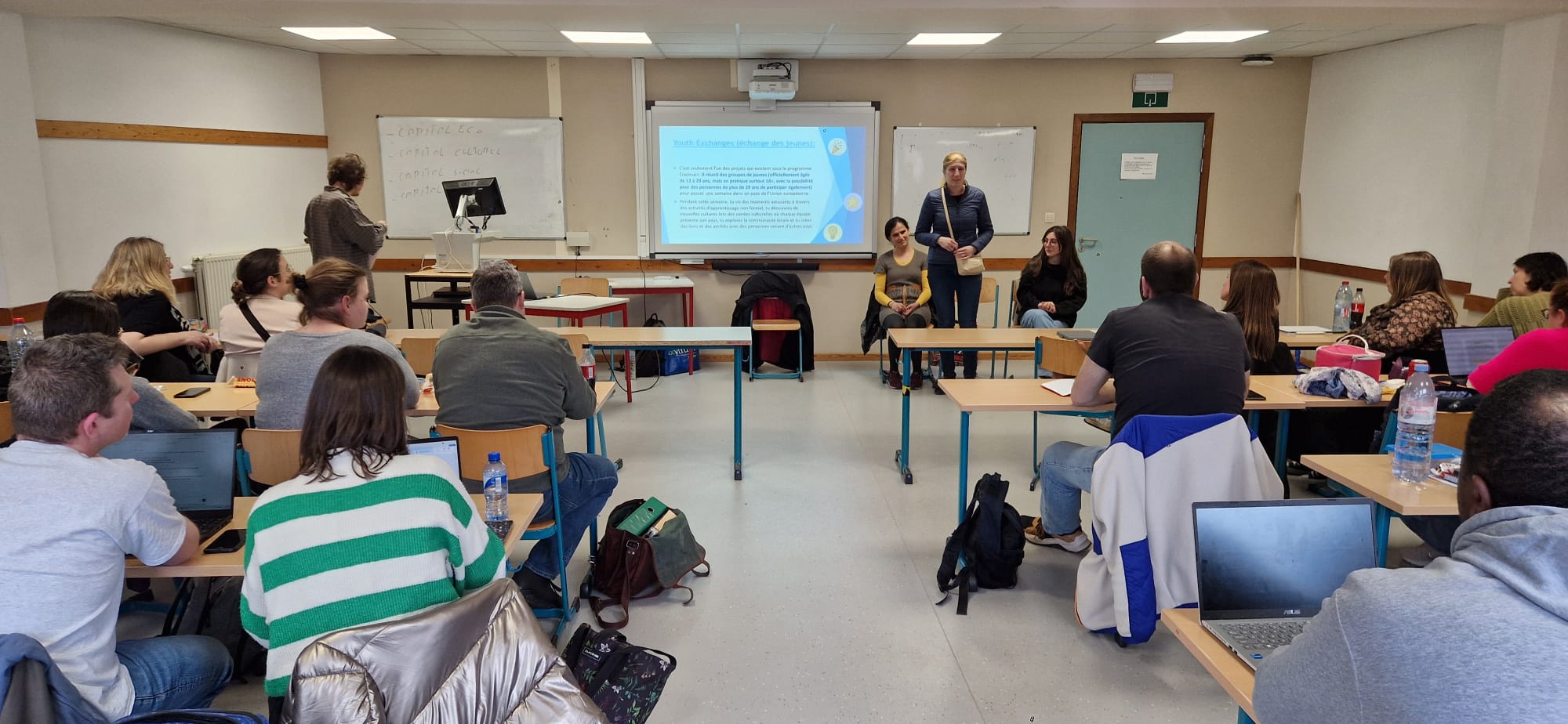
In this blog post, Sofia reflects on a hands-on awareness session delivered by VIEWS International at CPSE Liège. Through practical activities and open exchange, future educators and social workers were encouraged to engage directly with inclusion and accessibility, while discovering opportunities through Erasmus+ and the European Solidarity Corps. Read on to find out more!
On April 4th, Carmen, Selma, Silviu, and I headed to CPSE Liège for a day that went far beyond a standard awareness session. As an ESC volunteer, I’m used to new experiences, but this session was special. We weren’t just there to talk; we were there to bridge the gap between “theory” and “reality” for the people who are shaping and will shape the next generation of our community: social studies students, educators and youth workers. The energy was infectious from the start. We didn’t just show them inclusive tools; we put them to work. This hands-on approach is vital because true inclusion starts with understanding the lived experience.
- Exploring Tactile Play: It was eye-opening to watch the students realize how a simple game changes when you rely on touch rather than sight.
- Navigating the Streets: We took the training outside, teaching the “human guide” method and white cane techniques. There is a profound shift in perspective that happens when you have to trust a partner to navigate the sidewalk (it builds a level of empathy that a textbook simply can’t provide).
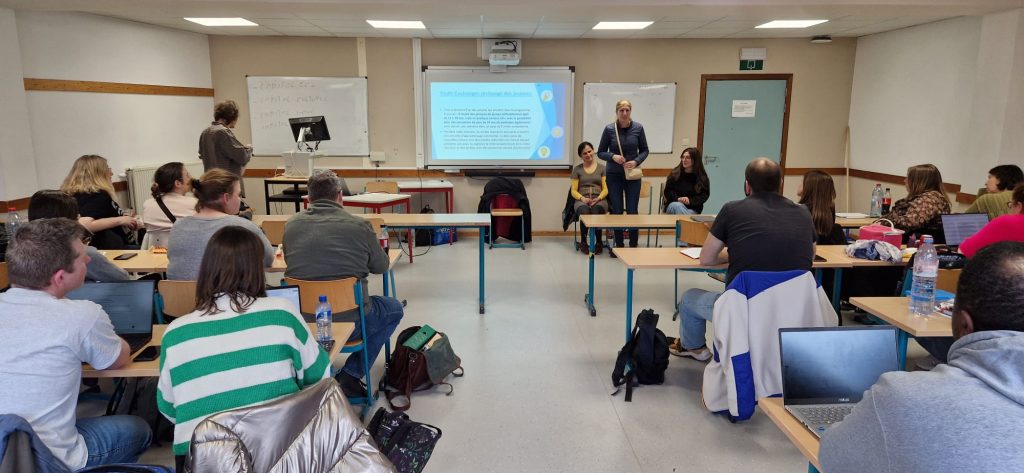
The most important part of my day was the incredible exchange we had with the participants! We talked and exposed the Erasmus+ and European Solidarity Corps (ESC) opportunities for young people and the participants had so many questions about our projects, especially regarding my and Silviu’s journey as volunteers. By sharing our path we showed them that international opportunities are for everyone! Often, young people with disabilities or fewer opportunities feel that traveling abroad or volunteering in another country is a closed door – not only because of physical barriers but also due to socio-economic ones. They may never even apply because they don’t believe these programs are “for them”. But educators, teachers, youth workers are the frontline to open them! By sharing the possibilities to the youth, you aren’t just giving them a brochure: you are giving them the tools to gain independence, confidence, and be part of a global community they might never have dreamed of reaching!
Sofia Mangiaterra