Beyond the Project: Reflections from an Erasmus+ Youth Seminar in Romania
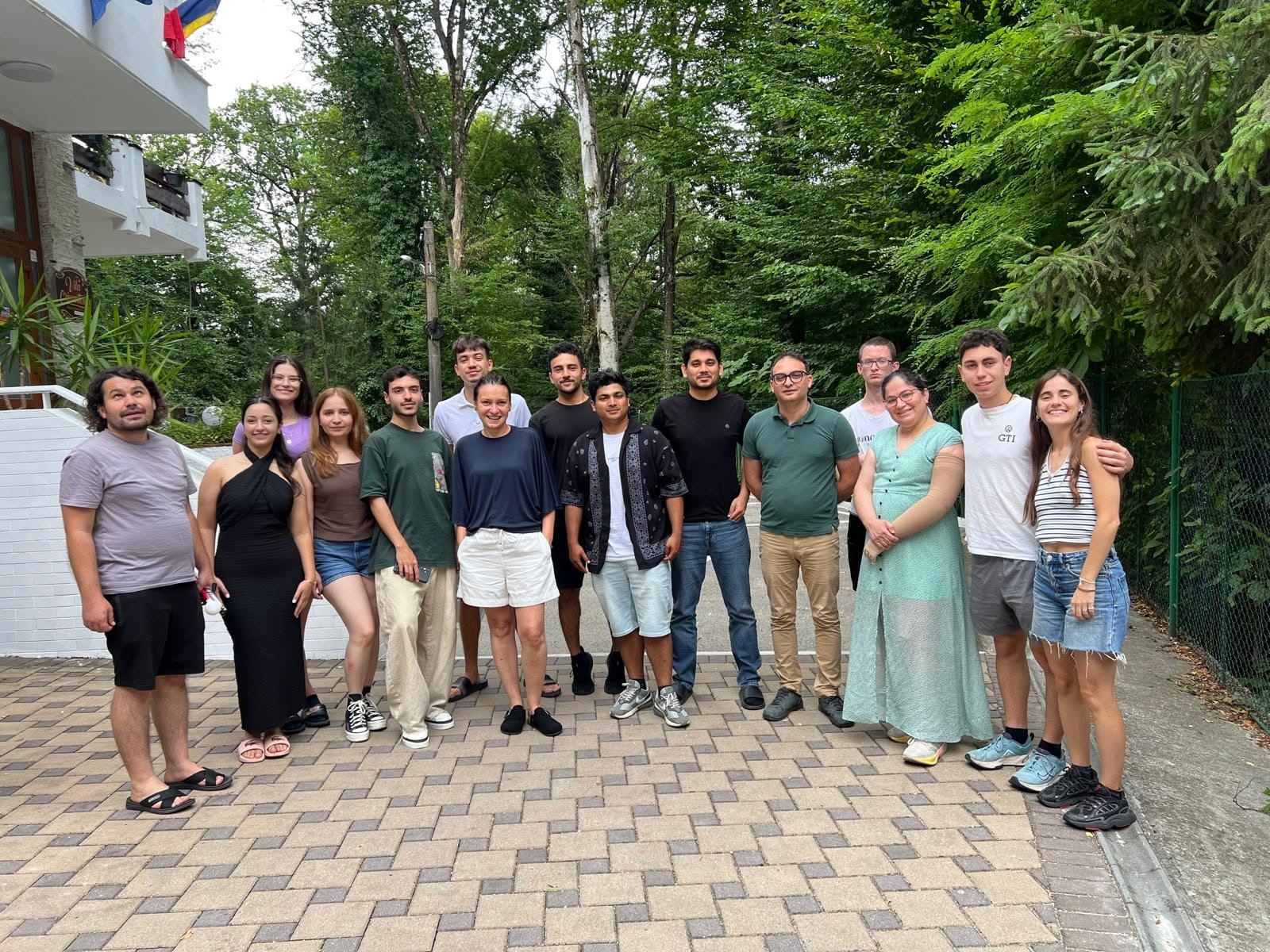
Last July, Adil, VIEWS International’s Delegate Administrator, joined the Erasmus+ Youth Seminar Beyond that Project: Measuring Impact and Shaping the Future of Erasmus+ Youth in Romania. In this personal reflection, he looks back on a week of learning, accessibility, intercultural exchange and the meaningful connections that made the experience unforgettable.
Between 14–20 July 2026, I had the opportunity to participate in the Erasmus+ Youth Seminar titled “Beyond that Project: Measuring Impact and Shaping the Future of Erasmus+ Youth”, held in Băile Govora, Romania.
Every Erasmus+ project adds something valuable to your life, but some projects make you think from the very first day, “I definitely have to write about this when I get home.” This seminar was exactly one of those experiences for me. During the week, I not only learned a great deal but also collected unforgettable memories. From unexpected travel adventures and acts of kindness to inspiring learning sessions and delivering my own workshop, it was truly a week full of meaningful experiences.
The seminar brought together representatives of accredited Erasmus+ youth organisations from across Europe. Its main objective was to explore how we can better measure the real impact of completed Erasmus+ projects and generate ideas for designing stronger projects in the next programme period. The seminar took place in Băile Govora, a peaceful spa town in Romania’s Vâlcea County. Surrounded by greenery and known for its calm atmosphere, it was the perfect setting for reflection and learning.
A Journey That Started with a Few Adventures
My journey began on Monday evening at 9:30 p.m. Although everything had been carefully planned, travel sometimes has plans of its own.
The first surprise happened in Osmaniye, where I missed the Havaş airport shuttle and had to travel to Adana as quickly as possible. Fortunately, I managed to catch another shuttle there and arrived at the airport on time. At 4:15 a.m., I boarded my flight to Istanbul, followed by my 10:45 a.m. flight to Bucharest. After passport control and collecting my luggage, I finally left the airport around 1:00 p.m.
My goal was to catch the 4:30 p.m. transfer to Băile Govora.
This is where I experienced something that deserves to be mentioned.
The police officers at the airport were incredibly helpful. They found the phone number of my transfer company, confirmed where the shuttle would depart, and even drove me to the transfer point in their own vehicle. They certainly didn’t have to do that, but they did. Receiving such kindness during the very first hours of my trip made me genuinely happy.
There was one more pleasant surprise. I had booked the 4:30 p.m. transfer just to be safe, which meant waiting for almost three hours. While I was wondering how to spend that time, the transfer driver noticed me and said, “If you’d like, you can take the 2:30 p.m. shuttle instead.” Thanks to him, I avoided a long wait and reached my destination much earlier.
After approximately three hours on the road, we finally arrived at our hotel.
The organisers’ commitment to accessibility became clear from the very first moment.
Since they knew I am visually impaired, they had reserved a single room for me right next to the reception and dining hall. This made it easy for me to reach the shared areas independently without disturbing anyone.
Their support went even further. Every morning, all presentations and training materials for that day were sent to me in Microsoft Word format. This allowed me to review the content in advance using my screen reader and participate in every session alongside everyone else. These may seem like small details, but accessibility is built on exactly these kinds of thoughtful arrangements. They allow you to participate naturally without constantly having to ask for assistance.
After dinner, we held our introductory activity. I only realised how exhausted I was the following morning when I woke up and noticed that I had forgotten to switch off the lights before going to bed.
Day One
After breakfast, we gathered in the training room for our first session.
Our opening activity was a short interview with the person sitting next to us. We asked about their name, organisation, the story behind their name if there was one, and an interesting event they had experienced during the previous month. Afterwards, we introduced one another to the whole group.
When I was asked about an interesting experience from the last month, my mind immediately went back to something that had happened in Bulgaria.
I needed a taxi, but Uber was unavailable. I asked a homeless man nearby for help, and we started walking together. He asked me where I was from.
“Turkey,” I replied.
Without any warning, he suddenly started singing a Turkish arabesque song at the top of his voice. If someone had told me beforehand that I would experience something like this in the middle of Bulgaria, I probably would not have believed them. It is still one of those memories that makes me smile whenever I think about it.
After the introductions, we discussed our expectations, concerns, and the contributions we hoped to make during the seminar. Together, we also established the ground rules that would guide us throughout the week.
I suggested adding one simple accessibility rule:
“When speaking to me, please say my name first. Instead of giving directions from a distance, come over and ask whether I need assistance. If I do, I can take your arm and we can walk together.”
Everyone appreciated this suggestion, and throughout the seminar they consistently followed it.
In the afternoon, we worked on identifying changes we would like to see at a university and developed strategies for making those changes happen. We concluded the day with a reflection session.
Day Two
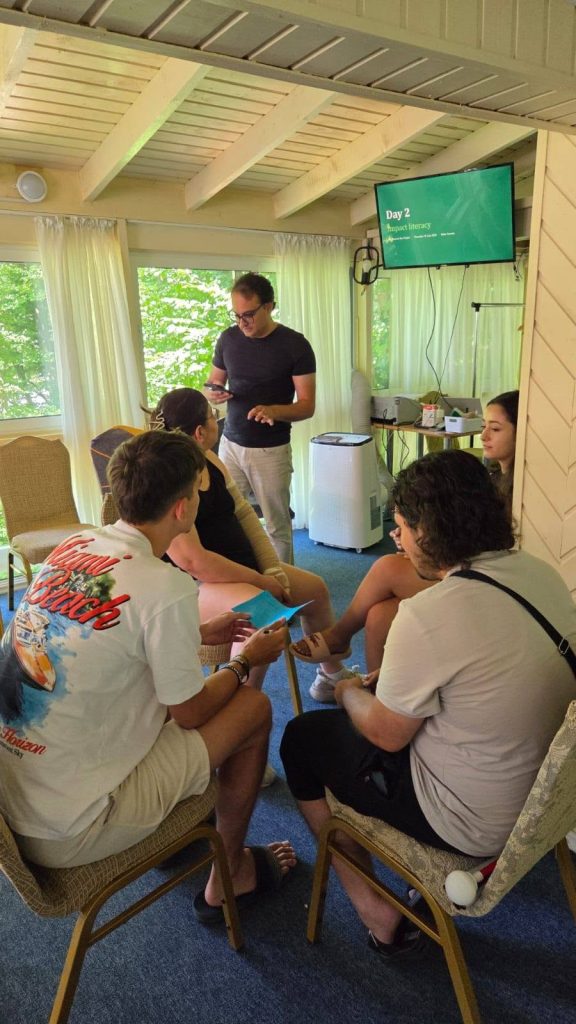
We started the morning with a fun game. We listened to seven different songs and tried to guess which ones were performed by Romanian artists. Our team won the challenge, which was a great way to begin the day.
Later, we worked on the question:
“How would we explain to a local resident why it is important for us to be here?”
Each group prepared three key messages and shared them with everyone.
The most educational session of the day focused on the concepts of Output, Outcome, and Impact. At first, these concepts seemed quite similar, but through practical exercises we gradually realised how different they actually are. We classified examples and then analysed our own examples to determine whether they represented outputs, outcomes, or long-term impacts.
In the afternoon, we moved our work outdoors into the park. Each group received a different scenario and was challenged to develop evidence collection methods other than surveys and interviews. Afterwards, we presented our ideas to the other groups.
The day ended with the Czech and Slovak Cultural Night.
Day Three
The morning began with another interactive activity. Our trainer read a short story while assigning us to one of three groups: Police, Thief, or Witness. Whenever our group’s name appeared in the story, we had to stand up.
Later, we formed new teams to explore three different Erasmus+ project types. My group worked on KA154 – Youth Participation Activities, researching this action and presenting its objectives and opportunities to the rest of the participants.
We then analysed sample Erasmus+ projects to distinguish genuine impact from simple project outputs.
In the afternoon, we explored different methods of collecting evidence. My group focused on the Youthpass process, demonstrating how learning outcomes from a sample project could be documented through Youthpass.
Day Four – A Very Special Day for Me
Saturday morning was particularly meaningful because, for the first time during the seminar, I became one of the trainers.
I delivered the disability awareness workshop that I had prepared for the participants. I introduced both the medical model and the social model of disability, answered the most frequently asked questions about visual impairment, and discussed many common misconceptions people encounter in everyday life.
The workshop attracted much more interest than I had expected. Even after the presentation officially ended, participants continued asking questions for quite a long time. Most of them were especially curious about my daily experiences as a visually impaired person, and our discussion lasted much longer than originally planned.
In the afternoon, our trainer facilitated a session on creating inclusive learning environments before we headed into the town centre.
One of the most memorable moments of the entire week happened there.
As we walked through the streets, my friends naturally began commenting on the environment:
“This place is accessible.”
“A ramp is missing here.”
“This pavement could be dangerous.”
Seeing that the ideas I had shared during my morning workshop had already begun changing the way people observed their surroundings made me incredibly happy.
Final Day
On Sunday, we reflected on everything we had learned throughout the seminar and discussed how we could apply these ideas within our own organisations and local communities.
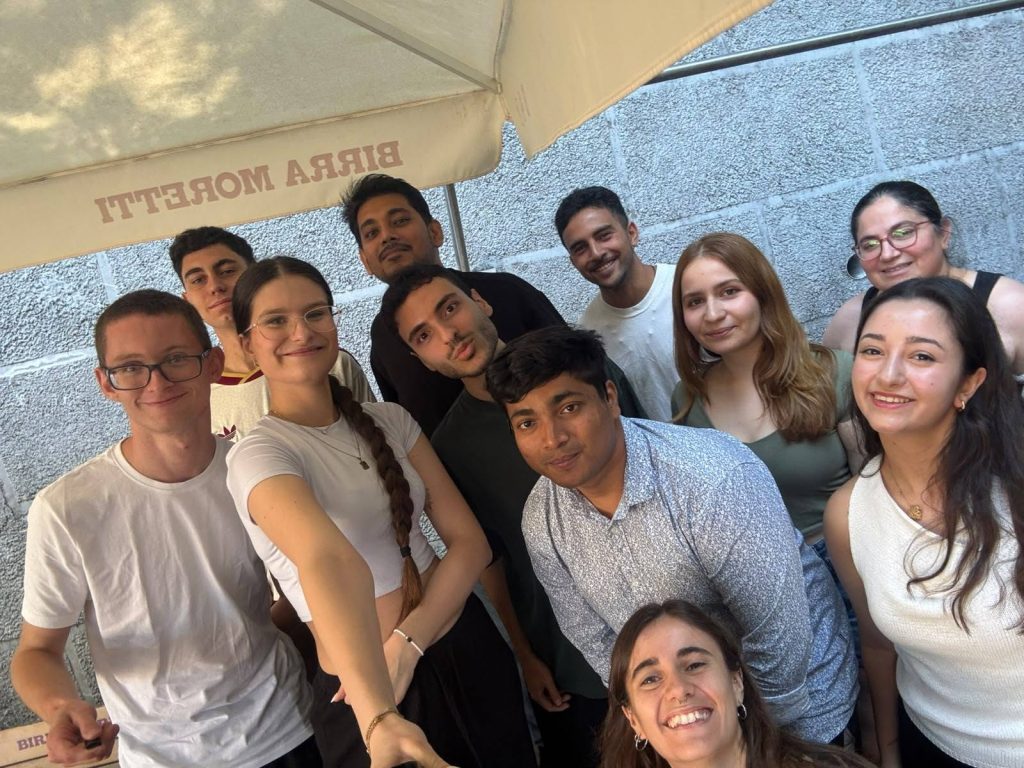
The seminar officially concluded with thank-you speeches and a group photo.
In the evening, we celebrated the Spanish Cultural Night, enjoyed a Kahoot quiz together, and watched the 2026 FIFA World Cup Final. Spending our last evening in such a relaxed atmosphere made saying goodbye a little easier after sharing an entire week together.
Two things stayed with me most from this seminar.
The first was that, although the seminar was not specifically focused on inclusion, everyone’s needs had been considered naturally throughout the organisation. Nobody ever felt excluded.
The second was that accessibility was not treated as an additional service but as an integral part of the event itself. From the very first day, I had a room conveniently located next to the reception and dining hall. Every morning, all presentations and training materials were sent to me in Word format, allowing me to review them using my screen reader before each session. I could follow every activity on equal terms with everyone else. Nobody ever had to wonder, “How will you manage this?” because the necessary arrangements had already been made in advance.
To me, that is exactly what accessibility means: creating an environment where everyone can participate equally without being made to feel different.
When I boarded my flight back to Turkey on Monday evening at 9:40 p.m., my suitcase contained much more than clothes and souvenirs. I was carrying home new friendships, unforgettable memories, and countless ideas that will inspire my future Erasmus+ projects.
Perhaps that is what I love most about Erasmus+.
Certificates eventually end up stored in a folder, but the stories you live remain with you for years. This seminar has certainly earned its place among the Erasmus+ experiences I will never forget.